Categories
Book Update

Book Update: Coming out of the Darkness

It is crazy to think that my book journey began three years ago.  I’ve learned from several writers that it is normal to take several years to write a first novel.  However, I am my own worst critic!  As much as it is possible for my first book to be amazing, I need to be patient with myself and just let myself learn.

Generally, the pattern for writing a novel is: come up with a storyline/plot/characters, free write with the storyline/plot/characters in mind, edit raw manuscript, rewrite the manuscript accordingly, repeat steps 2-4 as many times as needed, submit book to publisher, get offer from a publisher, do edits with the publisher, and finally get a finished work.  I’m on step 5b.  I’m rewriting the book, but this is actually not my first time doing so.

The first time I wrote it, it was too “dark” as my mom called it.  I had a lot of raw emotion that I wanted to add to the book, but for the average reader, my emotion would have been too heavy.  It was, as professional writers would say, “telling, not showing.”

Then the second time I wrote the book, I realized that while I was getting better at being descriptive, my storyline was not making sense.  My characters also seemed flat.  I had very specific characters that I wanted to use, but they did not fit the way my book was turning out.

I hate giving up control, but as a Christian, I believe that God directs me to write the book in a specific way to reach a specific audience.  I had an idea in my head of what I wanted to write about, and God has shaped it into something different each time I sit down at the keyboard.  Since the retreat I went on in October, I’ve learned how to develop real characters and a storyline that was interesting and made sense.

So since October 6th, I have been free-writing my third rewrite of this book.  That  means that I write with no agenda.  I sit in front of my Chromebook for an hour and spew whatever works come out of me onto my Google Docs word document.  My goal is been to write 80,000 words by the end of the year.  As of Sunday, when I last worked on it, I have written 66,813 words.  I’ll be finished with the rough manuscript in two weeks!

I am finally at the stage where I can name my audience and my plot.  For a while, I was trying to write this book to all people at all times.  However, my book needs to have an audience.  Instead of trying to please everyone, I need to write as if my story was just meant to reach one person.  I now have my person.  My audience is a young person (mature 16 to 24) who struggles with an anxiety disorder, whether it is Generalized Anxiety Disorder, PTSD, OCD, obsessive thoughts, Anxiety/Depression, Phobias, or just plain worry.  I know someone who deals with each of those things, one of them being the one writing this.  I wrote this book with the question playing in the back of my head: If someone were to write a story that can help me find peace and experience freedom from this trap, what would I write?

Now, I know I can’t answer all the problems of the world.  I know that my voice is a small whisper compared to the shout of those who are suffering.  But I have a story, a story that has helped me find freedom from my anxiety.  And while I still struggle, I believe that God has helped me tremendously with a disorder that has plagued me for so long.  Instead of sharing my testimony, I want to share a story.  I want to share it through the eyes of a fictional character, hoping that doing so will help my readers imagine themselves as the main character, believing that they can experience the same freedom and hope that I have.

The book is about a girl who grows up in a society where everyone is Christian.  But she feels like an outcast, because she struggles with anxiety.  No one is able to help her, so she withdraws herself and does not share how she feels with others.  But when she works at an internship with the castle, she learns from the King what she is missing, and she uses what she learns to do some pretty great things.

Being a writer is taking a long journey.  I’m not a book factory.  I’m a book creator,  and creativity takes time.  I’m thankful that after three years of stumbling through writing a book, there is now a light at the end of the tunnel.


Photo by Steve Halama on Unsplash

Categories
Books

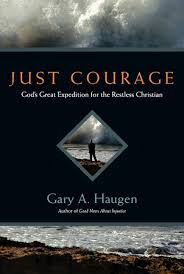
Just Courage: From Safe to Brave

The office where I work has a collection of books that the senior staff believed will help encourage us and strengthen us in our jobs.  I was interested to find a book by Gary Haugen, the founder of International Justice Mission, among the pile.  One of my friends works for IJM, so I was excited to read about the beginnings of this organization.  I also wanted to see what the work of IJM had to do with the work that I do in my church office.

The book is short, so it honestly is a nice pick-me-up, but if you really let the words settle into your soul, it will rock your world.  Haugen talks about his journey founding IJM, as well as the stories of some of his associates who have changed the world in big, brave ways.  At first, I thought this book would just be filled with success stories and a shout-out to the great staff at IJM.  But it also includes a challenge, a challenge to give up our safe and take on our brave.

Haugen uses the analogy of the cul-de-sac to describe how Christianity is today.  Most people feel that keeping their houses in a cul-de-sac area is safer because it is only one-way traffic.  However, studies have shown that more accidents occur in these areas than in other areas.  Therefore, we were wrong about what would be best for our children and families.

He expands on this idea of a cul-de-sac by saying that we tend to play safe in church.  We like our comfortable house, our kids, our pets, our finances, and we don’t really see life beyond that.  We get dissatisfied.  And the reason we get dissatisfied is because God has a bigger life for us.  He doesn’t want us to be safe; He wants us to be brave.  He wants us to trust Him.

I appreciate the work of IJM and the faith of Gary Haugen to start this organization.  I will admit that it is not a long book, so there is not much more to discuss.  But a powerful sentence can change the course of your day, even the course of your life.  Gary Haugen’s book Just Courage, although it is short, packs a punch that gets you thinking.  If you let it, this short book could change the course of your life.

In terms of how it relates to my job at the church, and my job as a writer, it reminds me that an act of courage can truly impact the world.  The courage that will truly change the world for good, though, is the courage that comes from knowing Jesus Christ as Savior.  I personally tend to be a fearful person, who even gets nervous going to work on occasion, but when I trust in the strength that God gives me, I am able to drive through traffic, make it to work, talk to people on the phone, interact with my co-workers, and handle all the tasks before me.  In my blog post next week, I’m going to share about what courage looks like.

Categories
Books

Freedom’s Ring: Boston Comes Alive

It is ironic to me that I’m writing a Christian fiction novel and I really don’t read a lot of Christian fiction.  When I went on the reNEW writers conference, I met a sweet woman who had just published her first novel.  It was so great listening to her story and hearing the journey that she endured while writing, rewriting, editing, and submitting her first novel.  I am glad that Heidi Chiavaroli’s novel Freedom’s Ring was my first real look at Christian fiction.

Freedom’s Ring is a time-slip novel, a novel that compares two stories in two different time periods.  The story follows Anaya, who, along with her family, suffered trauma from the Boston Marathon bombing in 2013.  In the midst of the chaos that day, a mysterious hero gives Anaya a ring that is able to sustain her through her healing journey.  They spend the rest of the book learning the history of the ring, trying to discover its ancient meaning, while learning about themselves in the process.

The ring dates back to the 1700s, on the onset of the Boston Massacre.  During this time, Liberty, whose brother James is a Patriot, is servant to a Redcoat.  She develops feelings for the Lieutenant and must choose between her allegiance to her country and her desire for love and acceptance.

This book was Christian fiction done right.  It captured my heart with emotion, but it also left me inspired.  I felt like I was there with the women in the story, talking with them, getting inside their brains.  From a writer’s perspective, I was able to admire the character development and the change of thought as Anaya heals from her trauma and Liberty undergoes the trauma of the Boston Massacre as well as the political drama of the American Revolution.  Heidi does a wonderful job in making a story so historical to us so relevant to the reader.

I also love that Heidi brought to life the city of Boston.  I didn’t really know a lot about Boston when I read this book.  I have been to Boston a few times to check out colleges around there and to visit my aunt, but the streets were not familiar to me after visiting a few years ago.  I felt like I had bought a one-way ticket to Boston and had taken the scenic route, admiring the culture of this city rich with history.

The book is great for anyone who loves history.  I can imagine a few people I know that like Christian fiction and history enjoying this novel.  The romance is innocent, the emotions are real, and the historicity is realistic.  I give a solid thumbs up to Heidi for a great success on her first novel.

For more information about the book, including where to buy it, you can check out Heidi’s website at http://www.heidichiavaroli.com/

Categories
Books

What I Learned from “Gray Faith”

I met Carrye Burr on the reNEW retreat that I attended on Columbus Day weekend.  She was one of the women who encouraged me and now continues to encourage me with my writing.  We sat next to each other in the main room where we had our plenary sessions.  At the retreat, they had a Book Celebration and Signing for everyone who had published a book that year.  Carrye’s name was on the list!  I was sitting next to a published author!

I read the excerpt from her book Gray Faith on a sheet that we had received of everyone who published a book.  She wrote that she had grown up in a Christian home, the daughter of a pastor, and she had a lot of questions about her faith.  But, because she grew up as a pastor’s kid, she did not feel she had permission to ask those questions.  Nevertheless, she writes this book with the answers that she has discovered throughout her life, especially through the various trials that she has endured with her health, raising her kids, and the adoption of her son.

When I saw her summary, I instantly wanted to buy a copy of her book, not just because she was a debut novel writer, but because she had a story that was worth sharing.

The book is a fairly quick read (about 100 pages), but the information that she provides is genuine and fresh.  Without giving away too much about the book, Carrye includes issues that people deal with today, such as “seeker-friendly” churches and how to deal with sin.  Through the lens of a mother of three kids and a daughter to an obedient pastor, she is able to provide parenting advice for those who want to foster spiritual growth in their children, especially for those kids who have these times of questions about faith.

My favorite part of the book is the chapter on the church.  Having grown up in the church, Carrye never really thought about what it would be like for first-time guests to a church.  She felt comfortable in her church, so she thought everyone did as well.  But as she moved from place to place with her family and tried out different churches, she realized that all churches do not do things the same way.

Because of the rise of “seeker-friendly” churches (the ones with the dim lights and the coffee and the pastors wearing jeans), Carrye begins to question how comfortable the church should actually be for first-time guests.  Yes, we want them to feel welcome, but Christianity in and of itself isn’t always about comfort.  As a matter of fact, it’s about conforming to God’s standard for our lives, which almost always means a surrender of our plans for our lives.  That doesn’t sound too comfortable to me.  Since I work for a church that I think does a pretty good job of making it seeker-friendly but also Christ-focused, it was encouraging for me to do a heart check of what is important in a church.

The book Gray Faith demonstrates a sign of maturity in the Christian who asks these questions. The Christian who questions does not take everything at face value. If you have these questions, they might not get answered through reading this book, but the book was meant to start a conversation. May your questioning bring you closer to God.

Carrye Burr self-published this book, and it was a great book to get her name out there to continue building her platform as a writer.  At the retreat, she was already playing around ideas for another book, so I’m excited to see what other ideas God gives her!  You can purchase Carrye’s book Gray Faith on Amazon.

Categories
Book Update

Book Update: My Journey at reNEW

Nine thousand, one hundred, and seventeen.

That’s how many pages I had written toward my third rewrite of my book.  By hand.  All my book needed was time, character development, and a meaty storyline.  I’m pretty sure God gave me all of that when I went on this retreat a few weeks ago.

I’d signed up for reNEW (retreat for New England Writing) over the summer.  One of my friends from church invited me after she saw that I wanted to pursue a career as a writer.  The three of us from church who traveled together on Columbus Day Weekend did not know what to expect.

I’d already told you about what I learned spiritually and emotionally.  You’ll be amazed to know what I learned vocationally.

The retreat took place at Holy Family Retreat Center in West Hartford, Connecticut.  Having been built in the early 1950s, this retreat center has served as a source of hope, recovery, and a renewed love for Jesus Christ.

Believe it or not, this is what my book was missing!

As you know, my book is about a young woman who struggles with anxiety and learns to deal with the wounds from her past.  My book started as a testimony of how God healed me of anxiety.  Because I wanted to minister to a non-Christian audience (so that they can also find freedom from anxiety), I made God a symbolic, ambiguous character in the story.  When people read the story (even Christians!), they had no idea that the King was supposed to serve as the God character.

Before going on this retreat, I had been wrestling with how much of God I should put in my book.  On this retreat, I learned that God should be where he always was in my life, my marriage, and my writing: right at the center.  After walking through the Stations of the Cross, I could imagine my character walking along the trail, seeing her anxiety through the eyes of her Savior who literally moved Heaven and Earth to save her.  That experience brought healing not only to my soul, but to the soul of my main character, Tori.

If you never read anything from me again, may this message stick with you: Jesus Christ died for all of our sins, defeating death and all that it entails, and rose again three days later, carrying with him the hope of eternal life.  We think that eternal life begins when we die.  Well, we die when we surrender our lives to Christ, and He gives us new life right now.  And that’s how I was finally able to understand how to overcome anxiety, when I realized how dead I was before Jesus came and breathed new life into me.  Now my anxiety has no power over me.  And that’s the message behind my book Kingdom of Truth (title pending).

I’m thankful for the people who made reNEW possible.  I’m so blessed to have met some wonderful ladies who are now encouraging me in my writing and are giving me some interesting material to read as well!  I felt like I was a spark plug in need of an outlet, and this retreat truly helped me get connected and revived.

Now that I’m back to “the real world,” please pray that I would take the time to really invest in this book.  I have very little free time in my schedule, and when I actually have time, I’m tired and just want to curl into a ball and drink some tea.  But the desire to write has been burning within, even more now that I’ve attended this retreat.  My goal is to finish the book by the end of this year.  I’m celebrating each time I write even a hundred words (a paragraph) a day.

Thank you all for your support and prayers!


Photo courtesy of Green Chameleon on Unsplash.


Categories
Books

Just Mercy: A Book that Made Me Cry, Ponder, and Cry Some More

As much as I love reading, it takes a lot for a book to make me cry.  Usually I cry at movies because the screen is right in front of me.  But a book has to be written in such a way that I can literally imagine myself standing in the same room as the one being hurt, and feel bad for him/her.

Bryan Stevenson’s book Just Mercy: A Story of Justice and Redemption was written in that exact way.

This book was another read recommended by the Willow Creek Global Leadership Summit.  The book was so well-written that I literally read it cover to cover.  I even read the Acknowledgements!

While reading the book, I thought that I was reading a fiction novel.  The book was written in a descriptive narrative that appeared to be omniscient perspective.  Stevenson had been able to perfectly replicate the feelings, thoughts, and actions, and motives of all the people who he highlighted in his book, just like a novelist would.

But that wasn’t the only reason why it felt like a fiction novel.

The book summary highlights the story of Walter McMillan, a man who was put on death row, having been wrongly accused of murdering Ronda Morrison of Monroeville, Alabama.  However, Stevenson also includes the stories of other cases that he had helped, especially children who had been sentenced to life without parole for non-homicidal actions.  McMillan’s story, as well as the others, exposed the racial injustice in the judicial system that Stevenson’s agency, Equal Justice Initiative, fights to correct.  The injustice that I read in the book was so terrible that I had wished throughout the entire book that it was a fiction novel.  I couldn’t believe that this was true, that these events had actually happened in our country.

The book is a timely novel in that there is currently debate over whether racism still exists today. For such a touchy subject as racism, Stevenson does a brilliant job of appearing unbiased toward the criminals as well as toward the victims.  Since the book was written in 2014, and the trials that he discusses took place between 1980 and 2010, it seems that Stevenson wants to continue the conversation of racial injustice in the judicial system so that it does not continue.  History has a habit of repeating itself.  If we forget about the mistakes of our ancestors, we run the risk of making the same mistakes.

While I was reading the book, my husband noted how often I would gasp.  I didn’t even realize I was doing it.  My gasps were in response to the incredulous actions of the court.  There were situations where they disposed of evidence in favor of the defendant, they forbade people of color to enter the courtroom, and they even sentenced the defendants to life without parole without any credible evidence that they committed the crime.  For the most part, the court just wanted to blame someone.

My gasps were also in response to the terrible lives that these criminals had to endure.  Stevenson writes in detail what it actually looks like for people to be executed in the electric chair.  I cried right along with them as the flesh was burning off of their skin.  One little boy was so small that the headpiece of the chair fell off his head when they did the first shock.  Stevenson also shares their backstories.  Some kids had watched their mothers get sexually and physically abused right before their eyes.  Some kids were good kids, but they hung around the wrong crowd.  Some had mental illnesses.

What Stevenson portrays in his book is that these people are, well, people.  They are people created in the image of God who have been tainted by sin, who have been broken by the world.  Just like all of us.  Maybe killing the broken people of this world isn’t the best way to make the world right.

To present a critical analysis of this book, I must point out a message that may not be clear to every reader: the fact that these criminals have terrible backstories does not excuse their behavior.  These stories may explain their behavior, but they do not excuse their behavior.  If a rape victim murders somebody because she feels paranoid that everyone is out to get her, it’s sad that she feels that way, but it does not make the fact that she murdered someone okay.  These kids did commit acts of violence that were completely and totally wrong.  What I think Stevenson is trying to argue, however, is that there should be a different way of dealing with these situations, such as through counseling or other correctional programs.  Simply killing someone (or letting someone rot in jail) who made a mistake does not fix their behavior.

For more information about Bryan Stevenson’s work with the Equal Justice Initiative, visit his website (click here).  The work that EJI continues to do demonstrates that the issues in this book are not completely resolved.  Pray about the part that you will play in promoting justice and mercy in our society.

Categories
Books

A Christian Perspective on Grit

Angela Duckworth’s Grit was featured at the 2017 Willow Creek Global Leadership Summit.  This book serves as a summary of the research she had done on grit, which she defines as the combination of passion and perseverance.  Duckworth also conducted a TED Talk regarding her research (I personally didn’t watch it because I wanted to strictly review the book.  When I finish writing this review I’ll check it out!).  If you want more information about success, read on for my review!

Summary

What drew me to the book at first was Duckworth’s anecdote of her father telling her that she was not a genius, and that she never will be a genius.  Normally, this denotes future failure, but Angela uses this comment from her father to challenge her to redefine success.  Angela is currently a professor of psychology at the University of Pennsylvania, but she has a colorful resume filled with doctorates, self-initiated organizations, and awards.  So if you’re not smart, does that mean you can never be successful?  If you don’t have raw talent, does that mean that you can never be the best?  As Duckworth would argue, raw talent alone does not define success.  What really matters is your passion and your perseverance, which are both driven by interest, practice, purpose, and hope.

As a lover of statistics, research, and case studies, I ate up Duckworth’s case studies from the companies and programs that we would label “successful.”  From studying the initiation program at West Point to interviewing the coach of the Seattle Seahawks, one question is echoed throughout the book: What yields success within these people?  The answer, of course, is grit.  Throughout the book, Duckworth interviews various “grit paragons” (people who exemplify grit) and discovers what drives them to pursue grit, even if they don’t directly use the term “grit” to describe their motivation.  Her goal, it seems, is to overthrow the cultural norm that raw talent will yield success.  When we have that mindset, we are doomed at childhood.  Conversely, Duckworth advocates that we must find our “one thing” and work at it until we’ve reached our full potential.

Although the interviews and research span throughout the entire book, Duckworth shifts mid-way through the book to talk to the reader about how to cultivate grit.  The second section of the book gives advice on growing grit “from the inside out.”  Duckworth encourages the reader to nurture interest, practice, purpose, and hope, qualities that we must intrinsically decide to pursue.  Even if someone instills the desire to pursue those things within us, we must be willing to take the step toward success.  As the old adage claims, you can bring a camel to the water, but you cannot make it drink.

The third section of the book discusses how to cultivate grit “from the outside in.”  Duckworth discusses her experience raising her two daughters to pursue a grit mindset.  In addition to her own parenting style, she also includes case studies that compare how Steve Young (quarterback of the San Francisco 49’ers) and Francesca Martinez (British stand-up comedian, actress, and writer) were raised by their parents.  She offers advice for parents to encourage their children toward success.  She challenges even those who are not raising children to invest in the lives of the children/youth around us.  The term parent, Duckworth mentions, actually means “to bring forth.”  Whether you have children that you are currently raising, or you’re babysitting, coaching, or teaching, you can influence them to pursue success.

As with most scientific research, the book ends in a question mark, but also an exclamation point.  What I mean is, Duckworth cannot conclusively provide a definite formula that will yield grit (and thus, success) in each of our lives.  However, she does make a point that grit is important, and that no one has ever regretted growing grit in their own lives.  Therefore, you can’t go wrong when you’re gritty.

Analysis

My knowledge of statistics involves one AP Statistics class in my senior year of high school (a whopping seven years ago!).  However, I know good research when I see it.  Angela Duckworth provides information from a variety of programs: from sports teams, to musicians, to writers, to teachers and students, that will inspire hope that success can be found in any area of work.  In journalism, I learned to beware the one-sourced story.  Not only does Duckworth interview a number of “grit paragons,” but she also indicates that her students have helped her in her research as well.  So, it’s not as if she is pushing her own agenda; she also has students that have dedicated time and energy to prove the importance and efficiency of grit.

I have taken away much of the information in her book to apply to my own life.  I’ve begun to pursue “my life’s purpose” by following a guideline that she includes from Warren Buffett: 1) Write down twenty-five career goals; 2) Do some “soul-searching” (whatever that means) and circle your top five goals; 3) Look at the other twenty you didn’t circle, and avoid those at all costs.  I have my top five, and I’ve been pursuing them for about a month now!

My other takeaway would be to develop a growth mindset rather than a fixed mindset.  Through reading this book, I realized that I had a fixed mindset as a child.  I was the best reader in kindergarten, and the best writer in first and second grade.  At that young age, I didn’t see any need for improvement.  However, this mindset caused me to respond poorly to criticism and adversity in writing.  I remember not wanting to write an essay for my final eighth grade English project and just barely passing the final.  I remember my teachers in high school rolling their eyes when I told them I wanted to be a writer.  I remember my eleventh-grade English teacher accusing me of plagiarism because the paper I wrote was just too good to be my paper.  I remember refusing to study English in college because I was sick of the judgment and criticism.  Through this book, I’ve discovered that I could have used that negativity to challenge me to be a better writer.  While I can’t go back and change the future, I can start today (and have started) to improve my writing skills and pursue my life’s purpose.  I thank Angela Duckworth for writing this portion and for helping to alter the course of my life.

To counter Duckworth’s book, however, I would speak on behalf of those looking for fulfillment in their jobs.  Most people my age are at entry level jobs; some are even at retail jobs that have nothing to do with their career.  We are enticed on social media with the idea that we can be anything we want to be.  We can make money traveling the world, staying at home taking surveys, or going out to eat at restaurants, so the typical office job does not sound exciting to us.  However, at the end of the day, we still have to work.  We still need jobs that pay the bills.  Grit, actually pursuing what we were made to accomplish, will take years to get us to our full potential.  What does that mean for our lives now?  What is that first step to pursue grit?  Do we simply keep working at our entry-level jobs until someone magically shows up and offers us a position in our field, or do we quit our jobs on the spot and look for a job more fitting for our passions (or do we take an action that’s a little less extreme)?  Duckworth’s book is brilliantly inspiring, but when the honeymoon stage fades, we’re left to wonder: What next?

I don’t believe that Duckworth meant to answer every question about success.  She claims to have a lot of research under her belt, but even with decades of work, she still cannot conclusively give a formula for success.  What I think she meant to do was to start a conversation.  I think she wants to change the atmosphere and to change our society’s way of thinking.  Talent is not what defines success, according to Duckworth; what defines success is the work you put into improving yourself.

A Christian Perspective

Before I conclude with a Christian perspective, I want to clarify that Duckworth does not claim any religious affiliation in her book.  This section is designated for me, as a Christian, to put in my two cents about the topic.  This is not an attack on Duckworth’s beliefs or research; this is simply me asking God, How do you want me to interpret this with the lens You’ve given me?  

While reading the book, all I could think about was Colossians 3:23: “Whatever you do, work at it with all your heart, as working for the Lord, not for man.”  This verse, in and of itself, defines grit.  God created us for a purpose on this Earth.  While most of us spend a large amount of time figure out if we are living out our purpose, God reveals our purpose in this verse.  It doesn’t matter what we do, as long as we are working as hard as we can with God as our focus.  This verse should encourage us to pursue grit (passion and perseverance) naturally by causing us to put our hearts into our work, as well as to never give up.

The conclusion of this book, that there is no definite formula for grit and success, can be discouraging to the average person.  If we dedicate our whole lives to pursuing grit, and then realize that we still “missed the mark,” we may wonder, what was the point?  However, I believe looking at this through a Christian lens does provide a definite formula for success.  Proverbs 16:3 explicitly states this formula: “Commit your way to the Lord, and your plans will be established.”  When we work for the Lord, we’re not trying to figure out our own life’s purpose; rather, we’re trusting God to show us the way.  This way is not void of adversity, difficulty, and even failure.  But God can use the struggles that we endure to grow us and to bring Him glory.

My conclusion?  Pursue success as God defines it: use the passion and energy that God has given you to carry out the Great Commandment to love the Lord your God, and to love your neighbor as yourself, all for the glory of God.


Duckworth, Angela.  Grit: The Power of Passion and Perseverance.  New York: Simon & Schuster, 2016.  Print.

Categories
Books

Feelin’ Great After Reading This Book!

A few days ago, I finished reading Lose Weight and Feel Great by Billy Hofacker.  Knowing that I wanted to write a review about it since I bought the book, I had anticipated telling you all that I’m 10 pounds lighter, I make my own smoothies, and I work out every day.  In one week, I’m proud to say that two of those are true!  (And no, it’s not losing weight…)  However, what I gained from this book was more important than what I lost.

You see, out of the nine chapters (including the intro and conclusion) that are in this book, seven of them focus on mindset and motivation.  Billy sprinkles some tips in here and there, but the message he’s really trying to portray is that anyone can make small steps to getting fit.  Instead of giving you a step-by-step, eat-this-not-that program to follow, he gives insight about the details that we don’t even realize go into eating healthy or working out.

For example, did you realize that kids are more likely to eat junk food after watching TV?  The reason why is because there are so many advertisements for junk food.  I even fell victim to the temptation this week.  I was watching a video on YouTube and saw an ad for chips.  All of a sudden, I forgot about my diet and instantly started to crave chips.  If there were chips I could access at the time, I probably would have reached for a bag!  But I’m glad that happened, so now I am aware of the temptations that are out there.

While there is no one-size-fits-all program, Billy provides advice that can help you change habits to create your own way to lose weight and feel great.  He starts with simply asking you why.  Why do you want to get in shape? That why will carry you forward in your endeavors to be healthy.

As a woman whose weight is affected by hormones, water retention, and stress eating/not eating (basically anxiety could make me eat more or less depending on the type of stress), I was more focused on reading this book because of the Feel Great part.  And while I have not lost weight yet, I never intended to lose weight because of it.  But I have to tell you, the takeaways I got from this book have helped me to become a better person.  I know it’s only been a week since I read it, but I pray that this motivation lasts.

Here are some things that I now implement in my life as a result of reading this book:

  • Weekly goals: I want to start each week with a goal in mind.  My goal this past week was to successfully finish a workout at SkyZone, a trampoline park near us.  In order to do that, I worked out every day, ate food that fueled me, and pushed myself not to give up.  Today, my husband and I completed the workout without having to stop.  Preparing yourself for the week or day ahead helps you make better decisions tomorrow.
  • Working out every day: To be honest, I thought it was bad to work out every day.  But now I do an intense workout one day, a moderate workout the next, and keep changing it up.
  • Watching what goes in: I’m not just talking about food.  After reading about how food advertisements can affect what you eat, I realized that my Facebook news feed is filled with people posting sugary recipes and memes about being lazy and eating a whole pizza (sorry if you suddenly start craving pizza!).  I found a nice little feature on Facebook that helps you hide a post you don’t like.  I now do this, not just for food on my news feed, but also for inappropriate posts (I’m literally amazed at what I see on Facebook these days).
  • Getting creative with my food: I was kind of in a routine of making poor choices.  We shop at Trader Joe’s, but we buy the same frozen food every time we go.  We received a Ninja (food processor) for our wedding, but we haven’t really used it.  In light of trying to eat healthier sweets, I’ve been blending what Billy would call a “recovery meal,” a smoothie packed with protein and vitamins.

I don’t want to give away too much about the book, but I do highly recommend it if you need a pick-me-up to help you work out again.  You can purchase the book on Amazon.  For those who are local to Long Island, you can also check out Billy’s challenge that he’s doing at Total Body Bootcamp and Performance Center: Click here for more information

Categories
Book Update

(Quick) Book Update: While I’m Waiting

Thank you for all the support I’ve received from my friends on social media, at work, and in my Bible study.  Although I’m the one who wrote the book, my book would not go anywhere if it wasn’t for your encouragement and guidance. Ultimately, to God be the glory!

To update my followers on my blog, I just submitted my book to a literary agent.  This is the first step on having my novel published.  I should be hearing back from them within eight weeks.  Until then…I’m going to make the best of my time.

What are your thoughts on these activities that I can do in eight weeks?

  • Couch to 5K: I’ve heard about this app from a few people, but my friend just told me today that I can train my body to run a 5K in just eight weeks.  Challenge accepted?
  • Read: I read for entertainment, but I’d like to develop the art of writing book reviews.  What books do you recommend?
  • Blog: This is a definite.  I’m going to continue Marriage Monday, Wisdom Wednesday, and Throwback Thursday.  What other topics would you like me to discuss?
  • Go outside: I’m inside eight hours a day, five days a week.  I need to spend more time outside.  My husband and I just bought a pass for the beach that works on state parks as well.  Do you have any favorite outdoor activities?

Above all, I’m going to pray and entrust my time to God.  No matter what I do, my goal is to give Him glory for using my dream of writing a book as part of His plan for the world.  I look forward to how He will grow and shape this book, as well as my passion for writing, into a piece of art that will further His kingdom.

I’ll be writing several updates about my book as well, such as questions I’ve heard regarding it, my motivation for writing it, and the journey of my story.  If you have any questions, advice, or comments about my journey, feel free to comment below or message me on any of my social media sites.  (As you can see, I’d really like to be blogging more, so if there’s anything you’d like me to write about, let me know!).

Thank you again for all of your support and prayers!  Stay tuned for Marriage Monday’s post on why those you love hurt you the most.


Categories
Book Update

Quick Book Update: When Writing is Like Breathing

Hey, all!  I’ve got some honest news for you.  In the process of rewriting my entire book, I have no emotional energy or mental stamina to write a full update for you.  Let me just send you a big thumbs up and tell you that everything is going great!

I had to take a break from writing my book for a little bit because my husband and I went away for four days.  The drive back and forth from our destination gave me a lot of time to think and process.  From that, I was inspired to write an article that I posted on Monday night. Since then, I’ve been reading a book for my Bible study, working, straightening up the house, and mustering the strength to write a chapter of my book.  I don’t exactly have a hard deadline, but lately, I’ve been writing a chapter a day.

No one (except for myself) is pressuring me to finish this book.

For those of you who do not share my passion for writing, here is an inside look at what it’s like to value writing just as much as you value breathing.  It was very late (about ten o’clock), and my husband and I were settling down to bed.  I knew I had to get up early for work, but for some reason, I could not fall asleep.  I tried sorting out my feelings by venting to my husband, but all the poor guy wanted to do was snooze.  After a few minutes, I gave up and decided to try closing my eyes.

When I finally relaxed, a thought came to my mind. No, not just a thought…a chapter.  In the five seconds it took me to gain consciousness again, I had conjured up a full chapter outline in my mind.  All I had to do was write it down, since I knew that such a genius idea would fly out of my head quite quickly.

There was only one problem: my journal was in my purse…in the other room, and not by my bedside.

Did I really have to get out of bed to write down my fantastic ideas?

Then I remembered: we’d brought the mail into our apartment, and we received a letter that had come in an envelope.  That envelope had enough blank space for me to write the sketch of Chapter 4!

I groped around in the dark, trying to find the envelope that I had tossed on the floor.  My husband leaned over and asked what I was doing, since I was moving the bed in the process. “It’s OK, honey,” I whispered, “just trust me.”  He is not one who values writing as much as breathing, but he did respect my need to get my thoughts on paper.  Finally, I found the envelope on which I could release the thoughts that had been caged inside my mind.

And now, the outline of Chapter 4* is safely written on two sides of said envelope.  Now expanding on my ideas, especially on a Thursday night, has been like pulling teeth.  But it’s fun, trust me!


*Chapter 4, as well as the preceding chapters, will be available to read once Chapters 5-31 are rewritten.  Stay tuned!